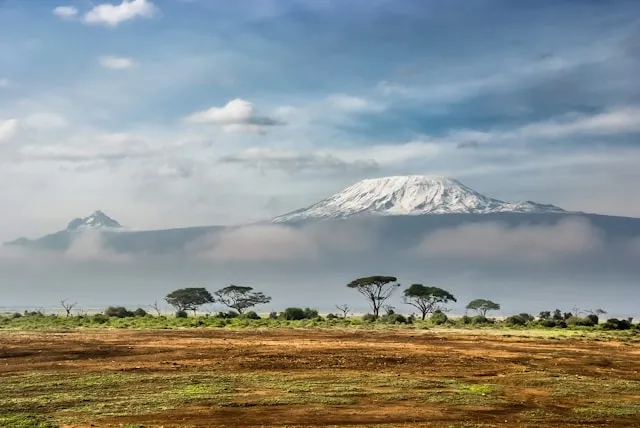
Amboseli is the easiest of Kenya's major parks to self-drive and arguably the most photogenic. It is a fraction of the size of the Masai Mara and far less crowded with vehicles, the road layout is genuinely simple, and the wildlife — especially its famously large free-roaming elephant herds — comes with the snow-capped backdrop of Kilimanjaro on clear mornings. This guide covers what actually matters: which gate, the routes that deliver, when Kilimanjaro is visible, and how to navigate when signal drops.
Amboseli is about 240 km south-east of Nairobi, roughly a 4-hour drive on the A104 to Emali, then south on a secondary road that becomes graded gravel near the park. This is meaningfully easier and shorter than the Masai Mara — much of the route is tarred, and you do not need to clear Narok and the C12 climb.
The park has four main gates that self-drivers use:
Kimana Gate (south-east) — the main
and most-developed gate, located near the KWS park
headquarters and the cluster of lodges (Tortilis, Kibo,
Tawi). The natural choice for most self-drivers and best
from the Mombasa road via Emali.
Meshanani Gate (north-west) — the
common entry for drivers coming directly from Nairobi via
Namanga. Close to Amboseli Serena and Ol Tukai lodges.
Iremito Gate (east) — quieter, with
KWS offices and well-maintained facilities.
Kitirua Gate (south-west) — the
remotest, in a dry corner near the Tanzanian border and
with some of the strongest Kilimanjaro views from the entry
road itself.
Kilimanjaro is what makes Amboseli photographically iconic, but the mountain is famously shy — cloud cover often hides the summit for hours or whole days. A few practical rules that help:
Cloud builds during the day and burns off again overnight. Early morning (around dawn to about 9:00 am) and late afternoon are when Kilimanjaro is most often visible. The cool dry season (June-October) offers the most reliable sightings; the rainy months are the worst. From inside the park, the strongest viewpoints are the Observation Hill platform looking south and the entry road near Kitirua Gate. Plan around the mountain: if you wake to a clear summit, drop your day's plan and drive toward the elephants in the swamps with Kilimanjaro behind them — you may not get another chance that trip.
Amboseli's wildlife concentrates around the central swamps fed by snowmelt and underground springs from Kilimanjaro. Most game viewing is straightforward circuits from one of the main gates through the swamps and back. Speed limit is 50 km/h on main roads, 30 km/h on game tracks, and off-road driving is prohibited.
Amboseli's signature loop. From Kimana or Meshanani, work the Enkongo Narok swamp on a slow morning drive — this is where the famous elephant herds bathe and feed, and Kilimanjaro looms behind them when the mountain is clear. Climb Observation Hill mid-loop (the only place in the park where leaving the vehicle is permitted) for the panoramic view. Allow a full morning.
From Kimana Gate, head along the eastern corridor to Longinye Swamp — quieter than Enkongo Narok, with excellent birdlife (pelicans, herons, kingfishers) and giraffe and elephant in the acacia woodland. A 2-hour loop that pairs well with the Central Swamp Circuit on the same day.
The western section follows the boundary of the seasonal Lake Amboseli — dramatic open plains with dust, sunset light, and Kilimanjaro's full ridgeline visible across the dry lakebed. Best in late afternoon. Avoid this loop in the rainy season; the lake floods and the tracks become impassable.
Coverage is better here than in the deeper parks (Tsavo, the Mara's western Triangle, or anywhere in northern Kenya), but expect signal to come and go. Of the Kenyan carriers, Safaricom has the strongest Amboseli footprint and is what most lodges and guides use. Signal is reasonable at the main gates and at the lodges; it drops intermittently in the central swamps and on the western Lake Amboseli loop. Live navigation apps that stream maps will not work in those stretches.
The technical point most travellers miss: your phone's GPS works without any signal or data. GPS is a one-way satellite signal your phone receives directly. The only thing that fails offline is the map — so the maps have to be stored on the device before you enter the park. This is precisely the gap SavannaQuest is built for: every Amboseli map is pre-loaded, so positioning and route recording keep working with the phone in airplane mode — useful in particular for logging exactly where you got the Kilimanjaro shot, since you cannot drop a normal pin offline.
KWS provides a paper map at the gates with the official circuits marked, which is the best basic reference and free with your entry. Carry it alongside any app. A printed map gives you the overview you need to plan a day's drive around Kilimanjaro light and gate-closure times, and is the sensible backup if your phone runs out of battery in the Kenyan heat. Treat a navigation app as a "where am I, where is the next swamp, how far to camp" companion, not a replacement.
The dry seasons — June-October and January-February — are the strongest for both wildlife and Kilimanjaro views. The two rainy seasons (March-May and November) are quieter and cheaper, but Lake Amboseli floods, the dust turns to mud, and the mountain is rarely visible. June through October specifically has the highest concentration of elephant herds in the swamps, when the surrounding ecosystem dries out and animals cluster around the snowmelt-fed water.
Can you self-drive in Amboseli?
Yes — it is genuinely one of the easier Kenyan parks to self-drive. The layout is simple, distances from Nairobi are short, and 4-hour drives in are practical from the capital. A 4x4 is recommended year-round and essential in the rains.
Do you need a 4x4 in Amboseli?
Yes in practice. Roads are gravel and become muddy or impassable in the rainy seasons. Most rental operators provide a Land Cruiser or Prado.
Which gate should I use?
Kimana from the Mombasa road via Emali (main, near park HQ and the lodge cluster). Meshanani from Nairobi via Namanga. Iremito for a quieter entry; Kitirua for Kilimanjaro views.
Is there phone signal in Amboseli?
Patchy. Safaricom has the strongest coverage; expect signal at gates and lodges but drops in the central swamps and Lake Amboseli loop. GPS positioning still works without signal if your maps are downloaded in advance.